The Invisible Ledger: Five Categories of Value That British Corporate Groups Own But Persistently Fail to Measure
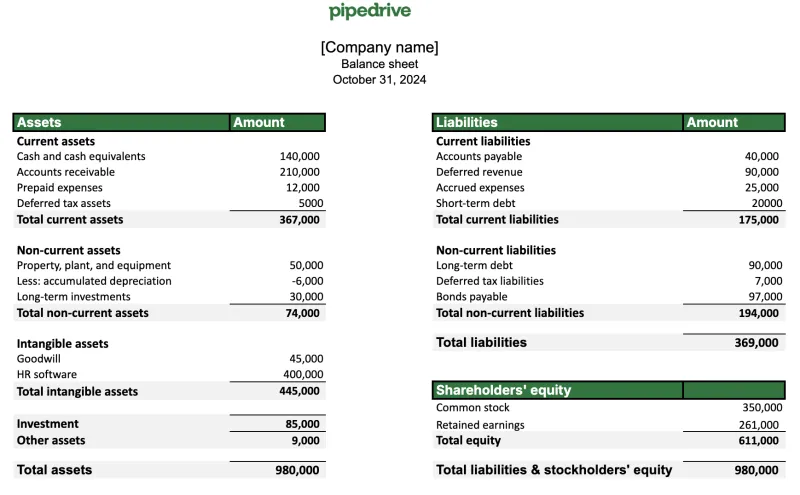
Photo: financial analysis corporate valuation assets balance sheet UK office, via www-cms.pipedriveassets.com
The Limits of the Ledger
A balance sheet is a precise document. It records what can be counted, verified, and attributed a monetary value with reasonable confidence. For the purposes of financial reporting, this precision is both appropriate and necessary.
For the purposes of strategic decision-making, however, it is dangerously incomplete.
Britain's multi-sector corporate groups routinely make decisions of enormous consequence — whether to divest a subsidiary, acquire a competitor, consolidate a division, or redeploy capital into an adjacent market — on the basis of financial information that omits many of the most strategically significant factors in play. The assets that most reliably determine long-term enterprise value are frequently those that appear nowhere on a conventional balance sheet.
The consequences of this pricing blindness are predictable: premature disposals that destroy latent value, acquisitions that appear attractive on paper but fail to account for what the target actually contains, and capital allocation decisions that optimise for the measurable at the expense of the consequential.
What follows is an examination of five asset categories that British corporate groups consistently undervalue — and why getting this wrong costs more than most boards appreciate.
1. Institutional Knowledge
Of all the assets a corporate group possesses, institutional knowledge is perhaps the most consequential and the least visible. It encompasses the accumulated understanding of how an organisation actually operates — not as described in process documents, but as practised by the people who have navigated its systems, relationships, and informal hierarchies over years and decades.
When a mid-market UK group divests a subsidiary or restructures a division, the financial model typically captures tangible assets, contracted revenues, and identifiable liabilities. It does not capture the senior manager who knows which client relationships are genuinely robust, which supplier arrangements carry hidden dependencies, or which operational workarounds have been sustaining performance for years. When that person leaves — as they frequently do in the wake of a transaction — so does a substantial portion of what made the business function.
Quantifying institutional knowledge is genuinely difficult, but the difficulty is not a justification for ignoring it. Scenario analysis, knowledge mapping, and structured retention planning can all contribute to a more honest assessment of what a business contains beyond its contracted assets.
2. Stakeholder Trust
Reputation is frequently cited in annual reports as a valued asset. It is rarely priced with any rigour.
For UK corporate groups operating across multiple sectors, stakeholder trust — encompassing relationships with clients, regulators, suppliers, lenders, and local communities — represents a form of relational capital that directly affects commercial performance. Groups with strong regulatory relationships navigate approvals more efficiently. Those with established supplier trust access better terms, faster response times, and preferential allocation during periods of constraint. Client trust translates into contract renewals, referral activity, and tolerance of operational imperfection.
None of this appears on the balance sheet. Yet in a disposal process, a group that fails to account for the trust premium embedded in a subsidiary will systematically undervalue what it is selling — and a buyer who understands this will price it accordingly.
3. Optionality Within Underperforming Divisions
The language used to describe underperforming divisions within corporate groups tends to be binary: a business is either performing or it is a candidate for disposal. This framing obscures a category of value that strategic investors understand well — optionality.
An underperforming division may carry embedded options that do not register in current financial performance. It may hold licences, accreditations, or regulatory permissions that are difficult to obtain independently. It may occupy a market position — even a weak one — that would cost substantially more to replicate from scratch than to restore through targeted investment. It may control physical assets, geographic presence, or customer data that become strategically significant under conditions that do not yet obtain.
British corporate groups that dispose of underperforming divisions purely on the basis of current EBITDA contribution frequently discover, several years later, that they have sold an option they could not price at the time. A more disciplined approach would value not only what a division currently produces, but what it could produce — and what it would cost a competitor to replicate its position.
4. Cross-Portfolio Learning Capacity
One of the genuine advantages of a multi-sector corporate group — relative to a single-industry operator — is the potential for learning to travel across portfolio boundaries. An insight generated in one sector, about customer behaviour, operational efficiency, or commercial structuring, can be applied with competitive advantage in another.
This capacity for cross-portfolio learning is rarely valued explicitly, yet it is one of the primary justifications for the holding company model. Groups that actively facilitate knowledge transfer across their portfolio generate returns that exceed the sum of their individual parts. Those that treat each subsidiary as an isolated entity forfeit this advantage entirely.
The challenge is that cross-portfolio learning capacity is almost entirely invisible to conventional valuation methods. It does not appear as a line item. It manifests, over time, in the performance differential between groups that actively manage knowledge flow and those that do not — a differential that is real, material, and consistently underappreciated at the point of capital allocation.
5. Embedded Management Bandwidth
The final category is perhaps the most counterintuitive: the strategic value of available management capacity within the group.
High-performing management teams represent a constrained resource. Their ability to identify, evaluate, and execute strategic opportunities is finite, and the quality of that capacity is not uniformly distributed across the market. A corporate group that has assembled an exceptional central management team — one capable of acquiring, integrating, and improving businesses across sectors — possesses a capability that has genuine, quantifiable value.
Yet this capability is rarely reflected in how groups value their own strategic options. A group with outstanding management bandwidth should, in principle, be willing to pay more for an acquisition than a competitor with weaker execution capacity — because the expected return on that acquisition is higher in its hands. Equally, a group that is stretching its management capacity across too many simultaneous initiatives is destroying value in a way that does not appear on any financial statement until the damage is already done.
Towards a More Honest Valuation Practice
None of these five asset categories is straightforwardly priceable. That is precisely why they are so consistently ignored. The financial models used by UK corporate groups are optimised for precision, and precision requires measurability. What cannot be measured tends to be set aside.
The strategic cost of this discipline is substantial. Capital allocation decisions made on incomplete information are, by definition, suboptimal — even when the information that is available has been analysed with perfect rigour.
The most effective corporate groups in Britain are those that have developed frameworks for reasoning about value that their balance sheets cannot capture — treating these five categories not as soft considerations to be acknowledged in passing, but as material inputs to every significant strategic decision they make.